MPs Push for Special Health Budget as Kampala Clinics Battle Patient Overload
By Our Reporter
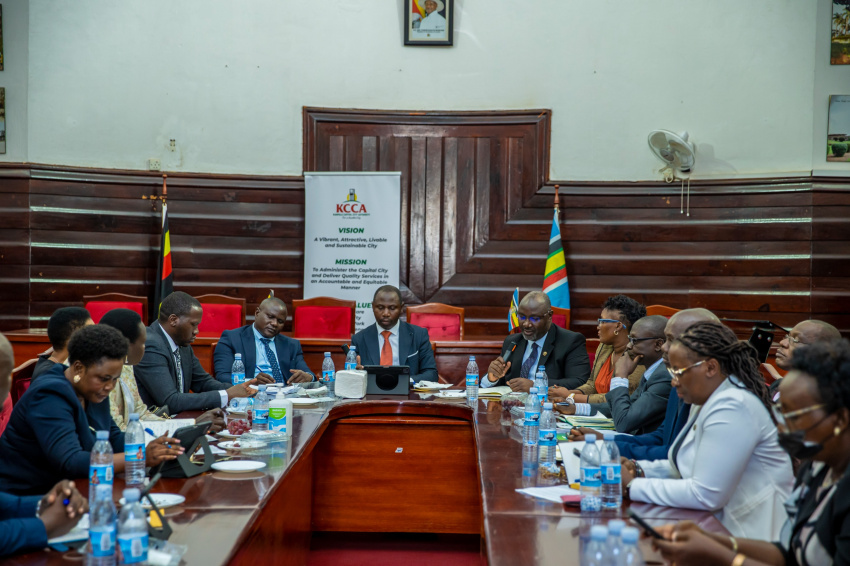
Members of Parliament have called for a special health funding model for Kampala after discovering that the city’s health facilities are treating far more patients than they were designed to handle, with shortages of medicines, inadequate staffing and limited medical equipment worsening the situation. The Chairperson of Parliament’s Health Committee, Hon. Julius Rude, made the proposal on October 12, 2026, during an oversight visit to assess healthcare delivery in facilities managed by Kampala Capital City Authority (KCCA).
Rude argued that Kampala faces unique healthcare challenges that require a different approach to government funding. He said the capital attracts patients from neighbouring districts and the wider metropolitan area, putting additional pressure on its limited health infrastructure. He proposed separate funding arrangements for Kampala, districts located along major highways, large districts such as those in Karamoja, and mountainous districts. Rude also called for the phasing out of Health Centre II facilities in Kampala, saying the city should have Health Centre IVs as its lowest level of healthcare provision.
The situation at Kisenyi Health Centre IV illustrated the extent of the problem. Although the facility was designed to serve approximately 100,000 patients annually, it treated 323,000 people last year. The Division Medical Officer, Dr Richard Walyomo, told the legislators that medicines supplied by the National Medical Stores are often exhausted within just two weeks because of the overwhelming demand. He added that health workers sometimes face accusations of selling or stealing drugs when supplies run out, despite the shortages resulting from the high number of patients seeking treatment.
Maternity services are also under considerable pressure, with Kampala’s public health facilities handling thousands of deliveries every year. Of the 85,987 facility deliveries recorded across the city last year, KCCA’s six health facilities at Health Centre III level and above handled 26,567. Kawempe National Referral Hospital recorded the highest number at 19,108, followed by Kisenyi Health Centre IV with 9,612, Kawaala Health Centre IV with 9,374, China-Uganda Friendship Hospital with 8,789, Mulago Specialised Hospital with 5,464 and Kitebi Health Centre III with 3,485 deliveries.
KCCA Deputy Executive Director Benon Kigenyi said the city’s healthcare burden extends beyond its resident population. He revealed that Kampala also serves approximately 170,000 registered urban refugees, alongside patients travelling from neighbouring districts. With no district hospital in Kampala, health centres are forced to handle heavy patient numbers while operating alongside national referral hospitals. Kigenyi said outpatient attendance at Kawaala and Kisenyi Health Centre IVs exceeds that of all regional referral hospitals, demonstrating the scale of demand confronting the city’s healthcare system.
Despite receiving Shs66.894 billion for health services in the current financial year, Kigenyi said KCCA still faces major funding gaps. The authority requires Shs17 billion to recruit 317 additional health workers and Shs8.5 billion to purchase medicines, medical supplies and logistics. It is also seeking Shs35 billion to upgrade two facilities to city hospital status, Shs4.4 billion to complete the maternity block at Kiswa Health Centre III, and Shs2 billion to operate an emergency medical services call and dispatch centre. Another Shs20 billion is needed for a food safety and hygiene laboratory and a permanent animal holding ground.
KCCA Director of Public Health and Environment Dr Sarah Zalwango raised concerns about inadequate diagnostic equipment, revealing that only two KCCA health facilities have ultrasound machines and only three have X-ray equipment. She called for investment in a comprehensive food safety laboratory to strengthen disease prevention and protect public health. Kigenyi also appealed to Parliament to support improved ambulance and referral services, medical-waste treatment, recruitment of health workers, medicine supplies, priority infrastructure projects and stronger enforcement of public health regulations.
Ruhaama County MP Beatrice Rwakimari commended KCCA for its efforts to provide healthcare despite the challenges and urged fellow legislators to support the capital’s health sector. “This is the face of Uganda and the numbers are overwhelming,” she said. The MPs began their oversight visit with a meeting with KCCA officials at the Mayor’s Parlour before touring Kiswa Health Centre. Their findings have renewed calls for a funding model that considers Kampala’s unique population pressures, growing demand for medical services and the need to expand healthcare infrastructure.